For Buyers
Texas Redfish, year-round, on a kitchen schedule.
For chefs, distributors, retailers, brokers, and hotel groups. Whole or filleted. Harvested to order. Lot-tagged on every carton. We farm one species and we farm it well.
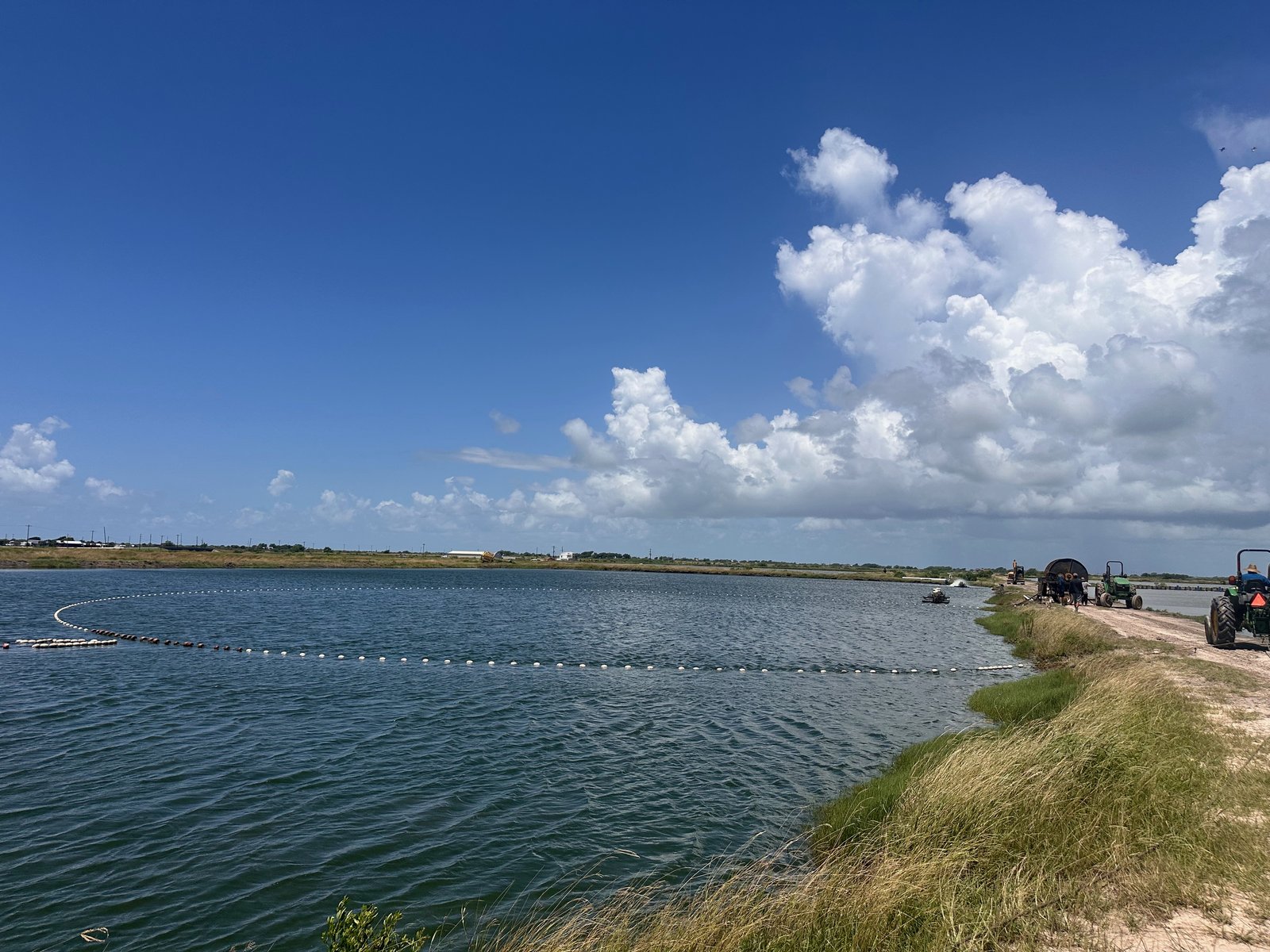
Turtle Creek Aquaculture raises Redfish — the Texas State Saltwater Fish — in raceways and ponds on our property in Palacios. We grade by hand, harvest twice a week, and ship whole or filleted with a lot ID that traces back to the day the fish came out of the water. We farm one species and we farm it well. If you want a Texas story on the plate, at the counter, or on the banquet menu, we are built for that.
Why source from Texas
Three facts that change the math.
8 of 9
Commercial U.S. redfish farms are in Texas (USDA 2023 Census of Aquaculture).
AgMRC commodity profile, 2025
Banned
Commercial wild redfish harvest, in Texas, Louisiana, Alabama, Florida, and federal Gulf waters.
Tasting Table, citing NMFS
Fresh, not frozen
Direct farm-to-customer cold-chain — no IQF intermediaries.
AgMRC market positioning
"If you buy farm-raised red drum at a supermarket or order it at a restaurant anywhere in the U.S., there's a very good chance that it was produced in Texas."
— Todd Sink, Ph.D., Texas A&M AgriLife Extension (2024)
What we ship
Vertically integrated, hatch to harvest.
Product
- Whole fish. Head-on, gutted or whole, harvested to order. Common harvest weights 2–4 lb.
- Filleted. Skin-on or skin-off. Hand-graded.
- Year-round availability. No seasonal whiplash. We harvest twice a week.
- Lot ID on every carton. Trace back to broodstock, raceway, harvest date.
Operations
- On-site indoor fry & fingerling nursery
- Broodstock and hatchery facilities
- Extensive pond grow-out systems
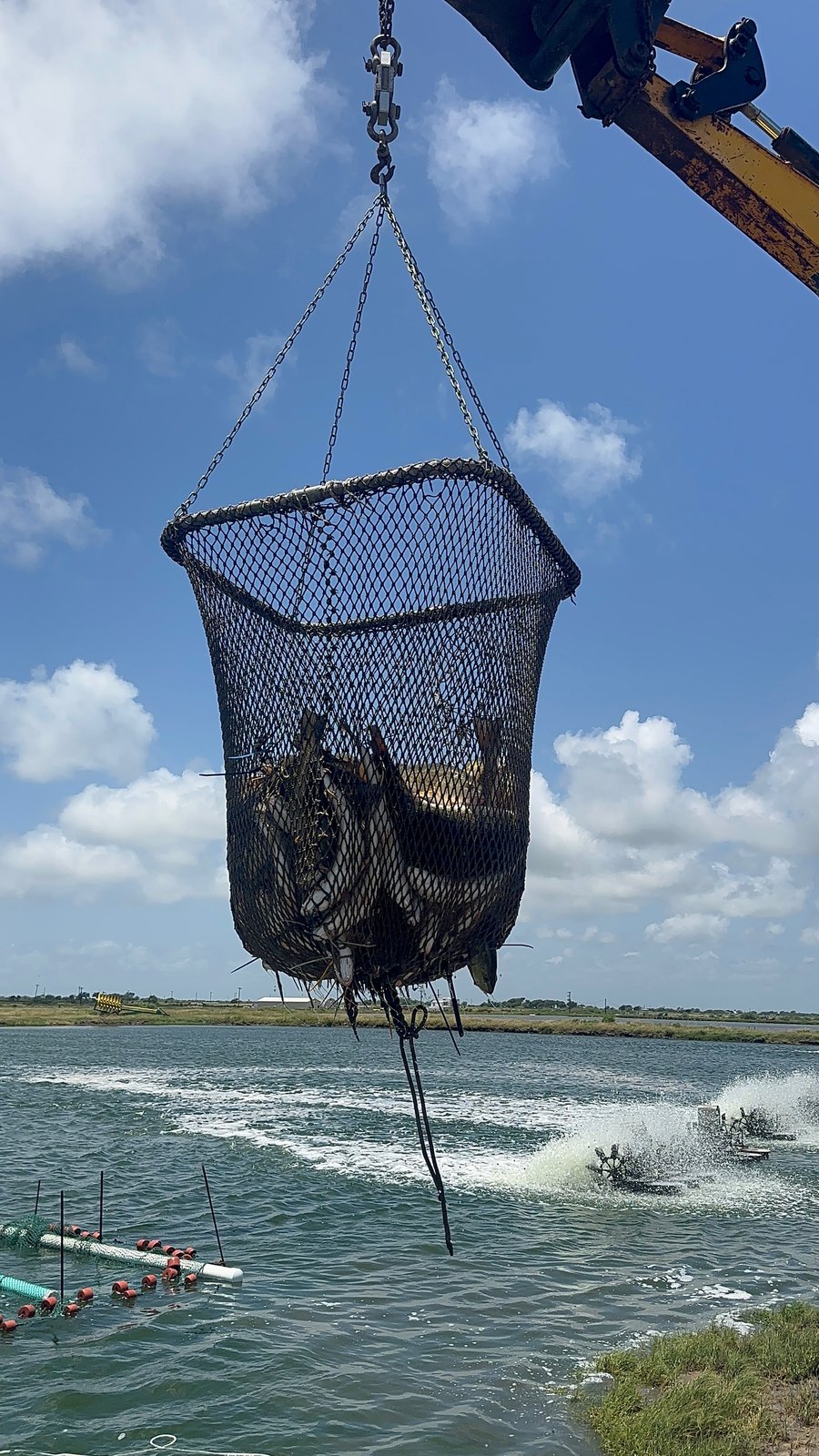
- On-site grading, harvesting, packing
- Advanced water-quality management
Five proof points
- Quality you can grade. Hand-grading at harvest, not after.
- Sustainability you can verify. Constructed wetland for discharge polishing. See practices.
- Texas origin, Texas native. Single species, regional native, raised in Palacios.
- Traceability end to end. Lot ID per carton.
- Conservation partnership. Native broodstock, partner-aligned with the wild fishery's restoration.
Who this is for
Five buyers. Five specs.
The universal story is above. The operational details — order size, delivery shape, lot-ID flow, labeling — change meaningfully by buyer type. Pick the one that fits you.
Restaurants & chef-owners
A Texas story you can put on the plate.
Case-sized orders, whole or filleted. Menu-ready Texas-grown label. A chef-direct relationship you can text on a Tuesday.
For restaurantsSeafood distributors
Pallet-scale, year-round, lot-tagged.
Cold-chain freight to your warehouse. Two harvests a week. Every carton carries a lot ID your downstream customers can trace.
For distributorsRetailers & grocery
Case-ready for the counter.
Whole fish and fillets graded for consistent counter display. Signage-ready Texas-origin story. Lot ID for clean FIFO and recall discipline.
For retailersBrokers & fish program managers
A single-species partner your accounts can rely on.
Multi-destination drops, per-account tagging, and the documented practice that makes you look good in front of your restaurants. We don't end-run the broker relationship.
For brokersHotels, resorts & country clubs
Banquet-scale consistency with a local story.
Standing weekly orders, multi-property P.O.s, Texas-story fit for venue branding, seasonal menus and tasting events.
For hotel groupsWhere we deliver
Five Texas metros, one farm.
Palacios is on Matagorda Bay, mid-coast. From there we deliver cold-chain to Texas's major metros on a planned cadence — same-day for the closest, next-business-day by freight for the farthest.
~2 hours · Same-day
Houston
Our closest big-metro market. Most common delivery route. Named restaurant partner on record.
For Houston buyers~3.5 hours · Same-day
Austin
Rigorous-sourcing kitchens, Hill Country hotel programs, food-and-wine event calendar.
For Austin buyers~3 hours · Same-day
San Antonio
River Walk hotel F&B, country-club dining, convention-scale banquet volume.
For SA buyers~5 hours · Next-day freight
Dallas-Fort Worth
Longest direct route; planned cold-chain freight, corporate-dining and country-club fit.
For DFW buyers~1.5 hours · Same-day
Corpus Christi & Coastal Bend
Our closest metro. Port A, Rockport, and the tourism-dining market. Same-watershed provenance.
For Coastal Bend buyersIndustry investment
Texas A&M is breeding for cold tolerance and feed conversion.
In 2024, Texas A&M AgriLife Extension launched the first U.S. redfish genetic-improvement program with a $300,000 USDA Southern Regional Aquaculture Center grant. Three-year project. Target traits: growth rate, feed conversion, cold tolerance. The deliverable is a producer-facing breeding-plan guide.
That program is industry-wide R&D, not a current attribute of TCA's broodstock. We mention it because Texas redfish is a serious, scientifically-supported industry — not a trendy product line. The kind of supplier we want to be is the kind that points at where the science is going.
FAQ
The questions every buyer asks first.
These answers hold for every buyer type. Order size, delivery routes, and account setup vary — those live on the per-group pages above.
What's the lead time on a first order?
Lead time depends on order size, species spec, and delivery zip. The fastest path is a phone call to 713-364-3701 — most first inquiries get a same-day or next-business-day quote. We harvest twice a week, so timelines tend to be measured in days, not weeks.
What sizes and grades do you ship?
Whole fish or filleted, hand-graded at harvest. Food-size harvest weights commonly run 2–4 pounds. Larger and smaller sizes can be planned in advance from grow-out cohorts. Specific count and weight grades are confirmed at order, with the grade printed on the lot card.
How is the cold chain handled?
Cold-chain monitored end-to-end. Insulated packaging, gel ice or wet ice depending on transit time, and refrigerated trucks for direct routes. Temperature logs are kept and available on request, in keeping with our recordkeeping commitment.
What does the lot ID system give me?
Every shipping carton carries a lot ID. That lot traces back to broodstock genetics, hatchery date, raceway number, harvest date, processor, and recipient. The lot card travels inside the box. A public per-lot URL (e.g., turtlecreek.fish/lot/[id]) is in development for v1.1; until then, your sales contact can pull the trace by lot ID over email.
Can I label the fish "Texas-grown" on my menu or counter?
Yes — for fish we sell direct from our farm. Fish that moves through wholesale processors downstream is unlabeled per industry convention; the labeling stays with what came directly from us.
For specific menu, counter, or package language ("farm-raised," "Texas-raised," "from Palacios," "Sciaenops ocellatus"), we will send you the public reference set. Confirm final wording with your counsel.
Order intake
What to include in a first inquiry.
No web form in v1. The fastest path is a phone call. If you'd rather email, here's what to include so we can quote on the first reply.
- Business name and type. Restaurant, distributor, retailer, broker, hotel/resort, or other.
- Expected weekly poundage. Even a rough range is useful.
- Delivery zip / region. Where the fish needs to land.
- Lead-time needs. When you need the first delivery.
- Whole or filleted. And size grade if you have a preference.
Call (713) 364-3701
Email Sales@turtlecreek.fish
Hours Daily, 9:00 AM – 5:00 PM Central
Visit 7474 TX-35 S, Palacios, TX 77465 — by appointment
We respond inside one business day. Marketing matches the filing — every claim on this page has a record behind it. See our practices · See the coverage.